
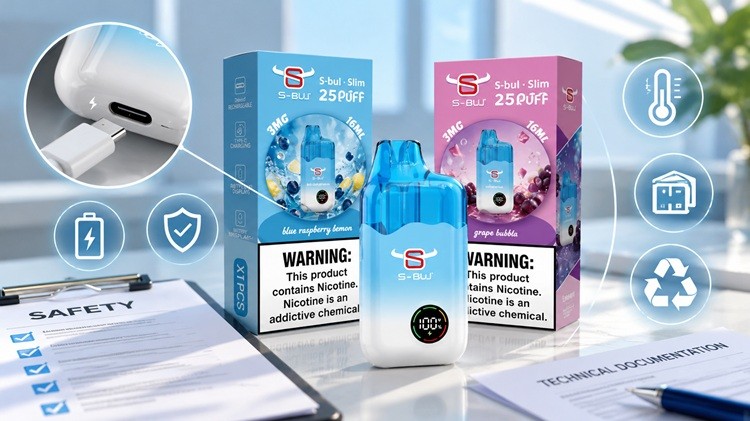
Rechargeable disposable vape devices combine an integrated battery, charging interface, electronic controls, and heating components within a compact enclosure. Although rechargeable designs allow the battery to be charged, their safe handling depends on more than the charging port or the battery capacity printed on a product specification sheet.
Understanding rechargeable disposable vape battery safety requires attention to charging practices, storage conditions, physical damage, overheating warning signs, transportation documentation, and end-of-life disposal. These considerations are relevant to adult device users, product safety personnel, quality assurance teams, and logistics teams responsible for handling battery-powered devices.
This guide explains general battery safety principles and uses the S-Bul Slim Disposable 25K Puffs as a specification example. Published specifications should not be treated as proof of safety certification or verified battery protection performance.
Why Battery Safety Matters in Rechargeable Disposable Vape Devices
Rechargeable disposable vape devices contain electrical energy storage systems that can be affected by inappropriate charging, physical damage, excessive heat, moisture, and unsuitable storage conditions. A malfunctioning rechargeable battery may present hazards such as overheating, leakage, smoke, or fire.
Battery safety should therefore be considered across the device’s entire handling lifecycle:
- Charging: Using the charging method and power source specified by the manufacturer.
- Storage: Protecting devices from excessive temperatures, moisture, and physical damage.
- Handling: Recognizing visible damage or abnormal device behavior.
- Transportation: Confirming applicable lithium battery documentation and shipment requirements.
- Disposal: Following local battery and electronic waste collection rules.
These precautions are relevant regardless of whether a device has a battery percentage display, a USB Type-C connector, or multiple operating modes.
1. Rechargeable Disposable Vape Charging Safety
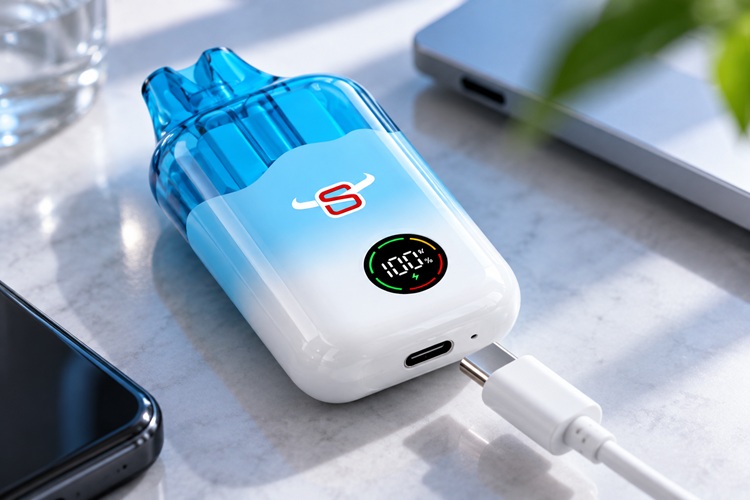
Charging safety begins with the manufacturer’s instructions. A USB Type-C connector identifies the physical interface, but it does not independently establish the device’s accepted charging voltage, maximum current, charging control design, or protection features.
Use a Compatible Charging Method
Before charging a device, review its supplied instructions and any stated electrical input requirements. Avoid assuming that every USB Type-C power source or charging accessory is suitable for every rechargeable device.
General precautions include:
- Use the charging equipment and power source recommended by the manufacturer.
- Inspect the charging port and cable for visible damage before connecting the device.
- Keep charging equipment away from water, excessive heat, and combustible materials.
- Place the device on a stable, nonflammable surface during charging.
- Avoid leaving a charging device unattended or charging it while sleeping.
- Disconnect the device and stop using it if abnormal heating, swelling, smoke, or unusual odors occur.
Does USB Type-C Mean a Device Is Safer?
No. USB Type-C is a connector standard, not a battery safety certification. It does not, by itself, confirm the presence or effectiveness of overcharge protection, temperature monitoring, short-circuit protection, or other battery management functions.
These features must be supported by product-specific engineering information or appropriate test documentation before they can be described as verified characteristics.
2. Understanding Battery Capacity and Device Specifications
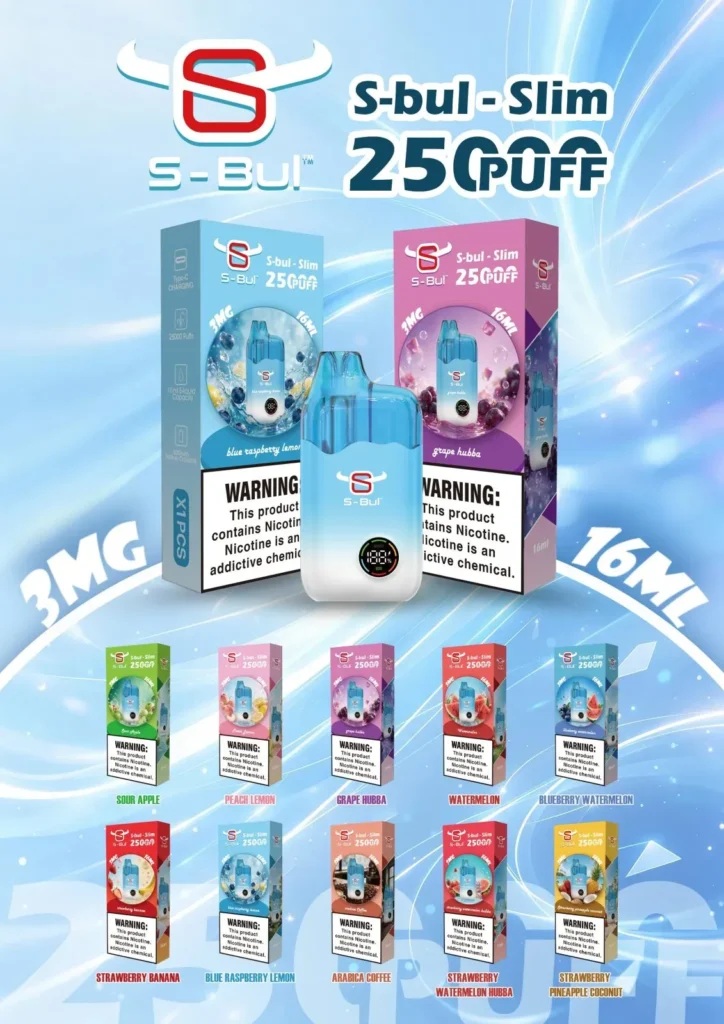
Battery capacity is commonly expressed in milliampere-hours (mAh). This rating describes an electrical charge capacity under specified conditions, but it should not be interpreted as a direct measure of charging safety, runtime, or product durability.
For example, the S-Bul Slim Disposable 25K Puffs product information lists the following specifications:
| Specification | Published Information |
|---|---|
| Product Model | S-Bul Slim Disposable 25K Puffs |
| SKU | SBUL-SLIM-25K |
| Battery Capacity | 800mAh |
| Charging Interface | USB Type-C |
| Display Features | Battery percentage, Boost and Eco modes |
| Battery Chemistry | Not confirmed from the referenced specifications |
| Charging Voltage and Current | Not confirmed from the referenced specifications |
| Battery Safety Certification | Not independently verified |
The listed 800mAh capacity and USB Type-C interface describe selected device characteristics. They do not establish the battery’s chemical composition, charging rate, protection circuit design, or compliance with any particular safety standard.
Similarly, a battery percentage display may provide useful status information, but the presence of a display does not demonstrate that the underlying battery monitoring system has been independently tested.
3. Safe Storage and Physical Handling
Storage conditions can affect the condition of rechargeable batteries. Excessive heat, moisture, mechanical impact, and prolonged exposure to unsuitable environments can increase the risk of damage or malfunction.
Recommended General Storage Precautions
- Follow the temperature and humidity limits provided in the manufacturer’s documentation.
- Keep devices away from direct sunlight, heaters, and other sources of excessive heat.
- Protect devices from water exposure and condensation.
- Avoid crushing, puncturing, bending, or dropping battery-powered devices.
- Keep devices in packaging that helps prevent accidental damage during storage and handling.
- Separate damaged, leaking, swollen, or otherwise abnormal devices from normal inventory and follow appropriate safety procedures.
Do not invent a universal storage temperature range or shelf-life limit when product-specific documentation is unavailable. Appropriate conditions depend on the battery design, device construction, manufacturer instructions, and applicable storage requirements.
What About Long-Term Storage?
For extended storage, responsible personnel should confirm whether the manufacturer specifies a storage charge level, inspection interval, maximum storage duration, or other battery maintenance requirements.
A device’s battery capacity alone cannot establish its shelf life or guarantee that it will remain functional after prolonged inactivity.
4. Warning Signs of Battery Damage or Overheating
Recognizing abnormal battery behavior is an important part of device safety. Some warning signs may indicate that a rechargeable device should no longer be used or charged.
Potential Warning Signs
- Unusual heat: The device becomes excessively hot during charging, storage, or use.
- Swelling or deformation: The enclosure appears distorted or physically expanded.
- Unusual odors: Chemical, burning, or other unexpected smells are detected.
- Smoke or visible leakage: Smoke, liquid leakage, or other signs of damage appear.
- Charging abnormalities: Charging behavior becomes inconsistent or is accompanied by unusual heat.
- Physical damage: The device has been crushed, punctured, or severely impacted.
What Should You Do If a Battery Overheats?
Stop using or charging the device immediately. Do not puncture, crush, open, or attempt to repair the battery. Avoid handling a device that is smoking, venting, or extremely hot.
If smoke, fire, or other signs of a serious thermal event occur, move away from the device, keep others clear, and contact emergency services as appropriate. Follow local emergency guidance rather than attempting an improvised repair or disposal procedure.
Damaged devices should not be returned to normal storage or shipment without an appropriate safety assessment.
5. Battery Safety Documentation and Technical Verification
Published product descriptions are useful starting points, but they do not replace engineering documentation or independent testing evidence.
For battery-powered products, technical verification may involve several categories of documentation:
| Document or Information | Purpose |
|---|---|
| Battery Specification Sheet | Identifies battery characteristics, operating limits, and relevant electrical parameters. |
| Charging Specifications | Defines compatible input conditions and charging requirements. |
| Applicable Safety Test Reports | Provides evidence of testing against identified requirements or standards. |
| UN 38.3 Test Summary | Provides relevant lithium battery transport testing information where applicable. |
| Handling and Storage Instructions | Explains manufacturer-defined precautions and environmental limitations. |
| Disposal and Recycling Guidance | Supports appropriate end-of-life handling under local requirements. |
The presence of a document should not be confused with a verified compliance conclusion. The document must be relevant to the actual battery or device configuration, and the applicable requirements depend on the product and destination jurisdiction.
Understanding UN 38.3
UN 38.3 refers to a series of tests associated with the transportation of lithium cells and batteries. A relevant test summary can be an important part of transport documentation, but it is not a universal certificate covering every aspect of device electrical safety.
Transportation requirements may also depend on battery classification, packaging, shipping mode, and other applicable dangerous goods rules.
6. Safe Disposal and Battery Recycling
Rechargeable disposable vape devices combine electronic components with an integrated battery. Because the battery may remain inside the device after it is no longer usable, end-of-life handling requires particular care.
General disposal precautions include:
- Do not place battery-containing devices in household recycling unless the local collection program explicitly accepts them.
- Use an authorized battery, electronic waste, or hazardous waste collection service as required by local rules.
- Do not crush, puncture, burn, or attempt to dismantle the device without appropriate training and equipment.
- Keep damaged or leaking devices separate and follow the receiving facility’s instructions.
- Confirm local disposal requirements because collection and classification rules vary by jurisdiction.
Some recycling facilities may not accept devices containing residual e-liquid or integrated batteries. Confirm acceptance conditions before transporting waste devices to a collection location.
7. Technical Specification Example: S-Bul Slim Disposable 25K Puffs
The S-Bul Slim Disposable 25K Puffs provides a useful example of how published device specifications should be interpreted in a battery safety discussion.
Its stated 800mAh battery capacity, USB Type-C charging interface, and battery percentage display identify selected device features. However, these details alone do not answer several important technical questions:
- What charging voltage and current are specified for the device?
- What battery chemistry and cell configuration are used?
- What charging and temperature protection mechanisms are documented?
- What test reports apply to the battery and finished device?
- What storage and transportation conditions are specified?
- What procedures are recommended for damaged devices and end-of-life handling?
These questions should be resolved through appropriate product-specific documentation rather than assumptions based on the connector type, display features, or capacity rating.
Rechargeable Disposable Vape Battery Safety Checklist
The following checklist summarizes practical areas to review when handling or evaluating rechargeable battery-powered devices.
| Safety Area | What to Check |
|---|---|
| Charging | Manufacturer instructions, compatible power source, cable condition, and abnormal heating. |
| Battery Specifications | Capacity, battery chemistry, charging limits, and documented protection features. |
| Storage | Temperature limits, moisture exposure, physical protection, and storage duration. |
| Physical Condition | Swelling, deformation, leakage, damage, unusual odors, or smoke. |
| Technical Documentation | Relevant specifications, applicable test reports, and transport documentation. |
| Transportation | Applicable battery classification, packaging rules, and shipping requirements. |
| Disposal | Authorized collection channels and local battery or electronic waste rules. |
Frequently Asked Questions
What charging precautions should be followed for rechargeable disposable vapes?
Follow the manufacturer’s instructions, use a compatible charging source, inspect the charging port and cable, and keep the device away from excessive heat and moisture. Stop charging if the device becomes unusually hot, swollen, damaged, or emits an unexpected odor.
Does a USB Type-C charging port guarantee battery safety?
No. USB Type-C identifies a connector interface. It does not independently verify overcharge protection, temperature monitoring, charging control performance, or compliance with applicable battery safety standards.
What does an 800mAh battery specification mean?
An 800mAh rating describes stated battery charge capacity. It does not independently establish charging speed, device runtime, battery lifespan, or safety certification.
How should rechargeable disposable vape devices be stored?
Follow the manufacturer’s storage instructions and protect devices from excessive heat, water, and physical damage. Do not mix damaged, swollen, or leaking devices with normal inventory. Product-specific storage limits should be verified rather than assumed.
What should be done if a vape battery overheats or swells?
Stop using and charging the device. Do not puncture, open, crush, or attempt to repair it. If the device is smoking, venting, or presenting an immediate danger, move away and follow local emergency guidance.
What documents help verify battery safety claims?
Relevant documents may include battery specification sheets, charging specifications, applicable safety test reports, UN 38.3 test summaries where relevant, and manufacturer handling instructions. The necessary evidence depends on the device and applicable regulations.
Final Thoughts
Rechargeable disposable vape battery safety depends on appropriate charging practices, storage conditions, damage recognition, transportation controls, and responsible disposal. Published features such as an 800mAh battery, USB Type-C interface, or battery percentage display can describe a device, but they do not independently establish its safety performance.
When technical information is incomplete, the appropriate approach is to distinguish confirmed specifications from unanswered questions and rely on product-specific documentation for safety or compliance conclusions.