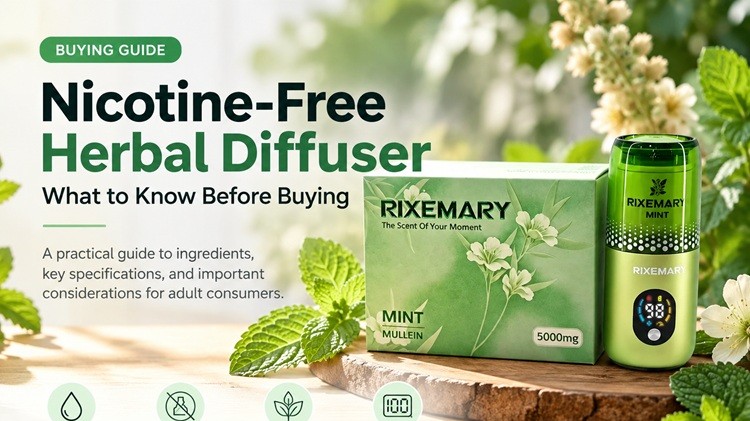
Nicotine-free herbal diffusers are one category of inhalation devices marketed to adults who want to understand alternatives to conventional nicotine-containing products. However, the term “nicotine-free” describes a claimed ingredient characteristic, not a guarantee of safety. Device design, formulation transparency, aerosol composition, and product testing all matter when evaluating these products.
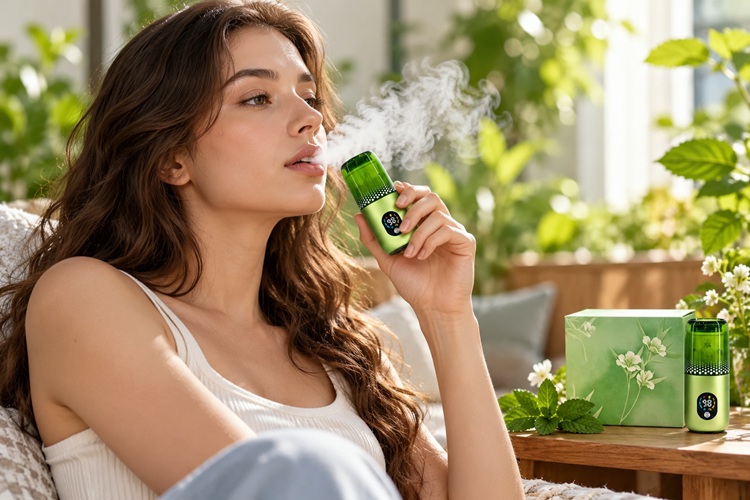
This guide explains the key specifications consumers should understand, using the Rixemary Mint Mullein Herbal Diffuser as a product example. It covers liquid capacity, nicotine labeling, herbal formula claims, digital displays, and important information to verify before making a purchasing decision.
What Is a Nicotine-Free Herbal Diffuser?
A nicotine-free herbal diffuser is generally marketed as a device that produces an inhalable aerosol from a formulation described as containing no nicotine. Products in this category may differ significantly in their ingredients, heating technology, battery configuration, and labeling.
Some products feature botanical-themed formulations or flavors such as mint and mullein. These names may describe flavor characteristics or advertised ingredients, but they do not independently establish the actual composition of the aerosol.
Consumers should distinguish between three separate questions:
- Nicotine content: Does the manufacturer claim the product contains no nicotine, and is that claim supported by appropriate testing?
- Ingredient transparency: Are the complete formulation and relevant ingredients disclosed?
- Inhalation safety: Is there reliable evidence concerning the substances users may inhale during operation?
A product may carry a 0mg nicotine label without providing sufficient information to answer the other two questions.
Understanding the Main Herbal Diffuser Specifications
Product specifications provide a starting point for comparing nicotine-free herbal diffusers. However, a specification should be treated as a manufacturer-stated claim unless supported by independently verifiable documentation.
1. Liquid Capacity: What Does 6ml Mean?
Liquid capacity describes the stated volume of formulation contained in the device or its reservoir. The Rixemary Mint Mullein Herbal Diffuser is described as having a 6ml liquid capacity.
When comparing products, consumers should verify whether the stated capacity represents the total filled volume, usable liquid volume, or another manufacturer-defined measurement.
Liquid capacity alone does not establish how long a diffuser will last. Actual consumption can vary with device operation, heating characteristics, and usage patterns. A larger stated capacity also does not establish better product quality or safety.
2. Nicotine Strength: Understanding a 0mg Claim
The Rixemary Mint Mullein Herbal Diffuser is marketed with a 0mg nicotine strength claim.
For consumers comparing nicotine-free products, this is an important labeling detail. However, a manufacturer-stated 0mg claim should not be confused with independent laboratory confirmation that nicotine is absent.
When reviewing a nicotine-free claim, consider whether the manufacturer provides:
- A clearly identified nicotine measurement or labeling basis.
- Relevant laboratory testing documentation.
- Information connecting test results to the specific product formulation or batch.
- Consistent nicotine information across the product page, packaging, and technical documents.
Important: Nicotine-free does not mean risk-free. Inhaled aerosols may contain substances that irritate or harm the respiratory system, even when nicotine is absent.
3. Herbal Formula: What Does 5000mg Represent?
The Rixemary product information includes a 5000mg herbal formula claim. Without additional documentation, the precise meaning of this figure cannot be determined.
For example, the number alone does not explain whether it refers to total botanical material, an extract quantity, a particular ingredient, or another manufacturer-defined measurement.
Consumers should look for clarification of the following:
- The botanical ingredients included in the formulation.
- The measurement basis for the advertised 5000mg figure.
- Whether the quantity refers to the entire product or an individual ingredient.
- Available information about formulation quality and relevant contaminant testing.
- Whether ingredient disclosures match the product packaging.
Botanical ingredients should not automatically be assumed safe for inhalation. An ingredient’s traditional use, natural origin, or suitability for consumption does not establish its safety when heated and inhaled.
4. Digital Display: What Information Does It Provide?
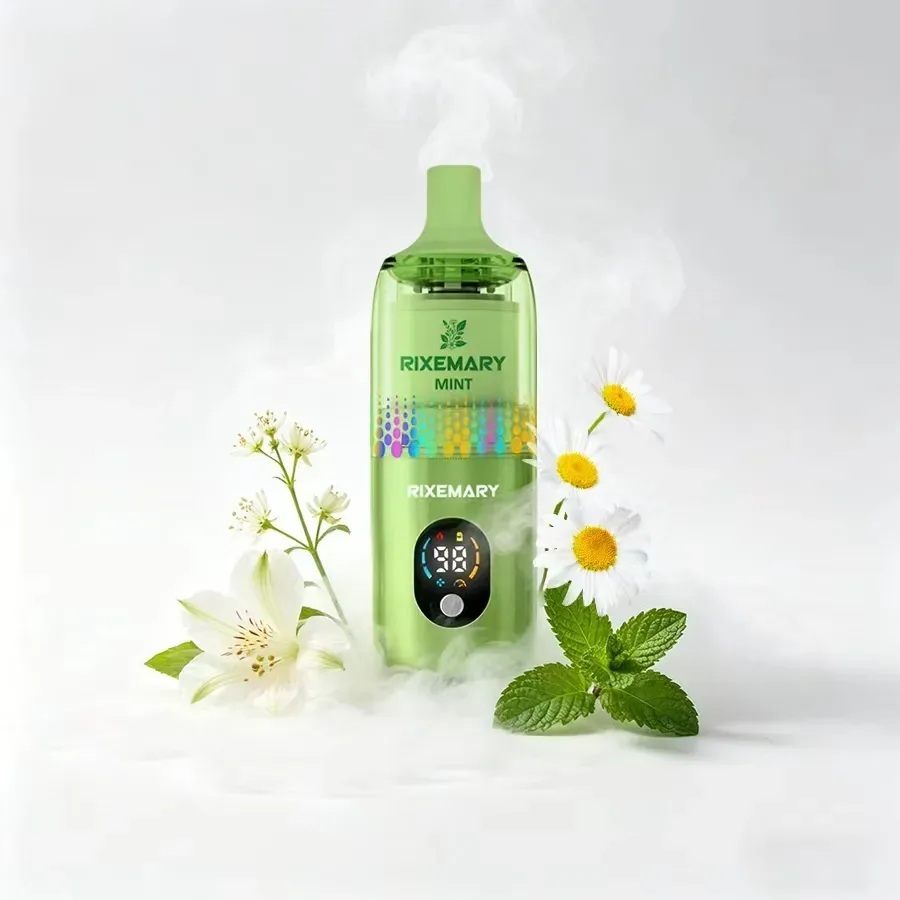
The Rixemary Mint Mullein Herbal Diffuser is described as featuring a digital display.
Digital displays on inhalation devices may be designed to communicate operational information, but their actual functions differ by model.
Before relying on a display feature, consumers should verify what the specific device shows. Possible functions in this product category include battery status, operational indicators, or other device information, but these functions have not been confirmed for this particular model.
A digital display should be evaluated as a usability feature rather than evidence of product safety, formulation quality, or testing compliance.
Rixemary Mint Mullein Herbal Diffuser: Specification Overview
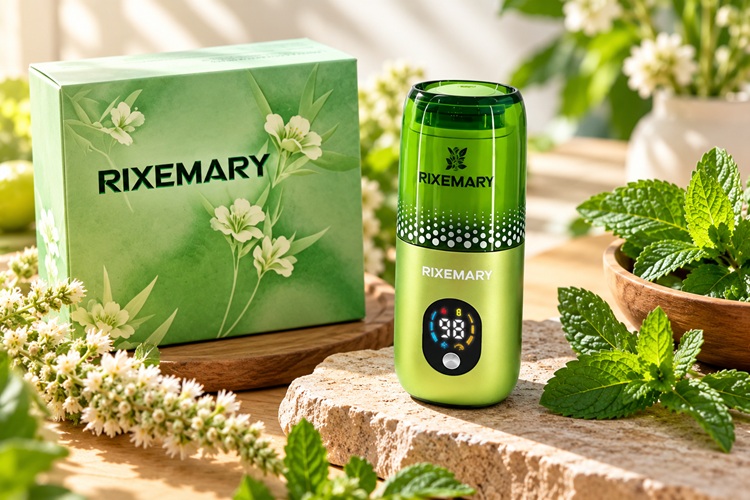
The following table summarizes the product characteristics described in the supplied product information. These are manufacturer-stated details and should be checked against current packaging and supporting documentation.
| Specification | Stated Information |
|---|---|
| Product Name | Rixemary Mint Mullein Herbal Diffuser |
| Product Category | Herbal Diffuser |
| Flavor | Mint Mullein |
| Nicotine Strength | 0mg (manufacturer-stated) |
| Liquid Capacity | 6ml (subject to label verification) |
| Herbal Formula | 5000mg (measurement basis unverified) |
| Display | Digital Display |
| Battery Capacity | Not verified |
| Complete Ingredients | Not verified |
| Independent Testing | Documentation not established |
For current manufacturer-stated specifications, see the Rixemary Mint Mullein Herbal Diffuser product page. Product listings should be supplemented with ingredient information and relevant documentation where available.
What Should Consumers Compare Beyond Product Specifications?
Two herbal diffusers can have similar capacity and nicotine labels while differing substantially in formulation, construction, documentation, and operation.
Ingredient Disclosure
A meaningful product comparison should include information about the substances present in the formulation. General descriptions such as “herbal blend” or “natural ingredients” do not replace a complete ingredient disclosure.
Consumers should also recognize that the composition of a heated aerosol may differ from the composition of the original liquid.
Device and Battery Information
Where a device contains a rechargeable battery, relevant information includes the battery type, charging method, manufacturer instructions, and appropriate handling precautions.
If these details are missing, consumers should not infer battery capacity, charging compatibility, or protective features from the device’s appearance or display.
Testing and Documentation
Testing documentation can help establish whether particular manufacturer claims have been evaluated. The usefulness of a report depends on its scope, methodology, tested sample, and relevance to the actual product.
A generic certificate or unrelated laboratory report should not be treated as confirmation that a specific diffuser formulation is safe for inhalation.
Manufacturer and Labeling Information
Product packaging should provide identifiable manufacturer or responsible-party information, appropriate warnings, and other details required by the intended market.
Requirements differ by jurisdiction and product classification. A nicotine-free label does not automatically exempt an inhalation product from applicable restrictions.
Are Nicotine-Free Herbal Diffusers Safer Than Nicotine Vapes?
Removing nicotine eliminates exposure to nicotine from the formulation only if the nicotine-free claim is accurate. It does not establish that the resulting aerosol is harmless or that the product is safer overall.
Health risks depend on the ingredients, aerosol constituents, heating conditions, exposure, and other factors. Without reliable product-specific evidence, broad safety comparisons are not justified.
Similarly, herbal diffusers should not be assumed to improve breathing, cleanse the lungs, relieve respiratory symptoms, or support smoking cessation. Such claims require appropriate scientific evidence and, where applicable, regulatory authorization.
For people who do not currently inhale nicotine or other aerosol products, avoiding initiation of inhalation exposure is the lower-risk choice.
Common Questions About Nicotine-Free Herbal Diffusers
What is a nicotine-free herbal diffuser?
A nicotine-free herbal diffuser is an inhalation device marketed as producing an aerosol from a formulation without nicotine. The exact ingredients and device technology vary by product, so the complete specifications should be reviewed rather than relying on the category name alone.
Does 0mg nicotine mean a herbal diffuser is safe?
No. A 0mg nicotine claim does not establish that a product is safe to inhale. Other aerosol constituents, heating byproducts, and contaminants may present health risks. Nicotine claims and safety claims require different types of evidence.
What does 6ml capacity mean on a herbal diffuser?
A 6ml capacity claim generally refers to the stated liquid volume associated with the device. It does not independently establish operating duration, puff count, or product quality. The measurement should be confirmed against the manufacturer label.
What does a 5000mg herbal formula claim mean?
The meaning depends on how the manufacturer defines and measures the formulation. Without a detailed specification, consumers cannot determine which ingredients are represented by the 5000mg figure or how the quantity relates to the 6ml liquid capacity.
Does a mint mullein diffuser have proven respiratory benefits?
The presence or advertised inclusion of mint or mullein does not establish a respiratory health benefit from inhaling a heated aerosol. Therapeutic claims require reliable clinical evidence and appropriate regulatory authorization.
What should I verify before considering a herbal diffuser?
Check the complete ingredient disclosure, nicotine testing claims, liquid capacity, battery and device specifications, manufacturer identification, relevant warnings, and applicable local restrictions. Missing documentation should be treated as an unresolved information gap rather than evidence that a product is safe.
Final Thoughts
Understanding a nicotine-free herbal diffuser requires looking beyond its flavor, packaging, and advertised capacity. Product specifications can support factual comparisons, but they do not independently demonstrate ingredient transparency, aerosol safety, or regulatory compliance.
The Rixemary Mint Mullein Herbal Diffuser provides an example of several commonly advertised characteristics: a 0mg nicotine claim, 6ml capacity, 5000mg herbal formula claim, and digital display. The meaning and verification status of these specifications should be established before drawing further conclusions.
For additional product documentation or clarification of manufacturer-stated specifications, visit the S-BUL contact page.